In short
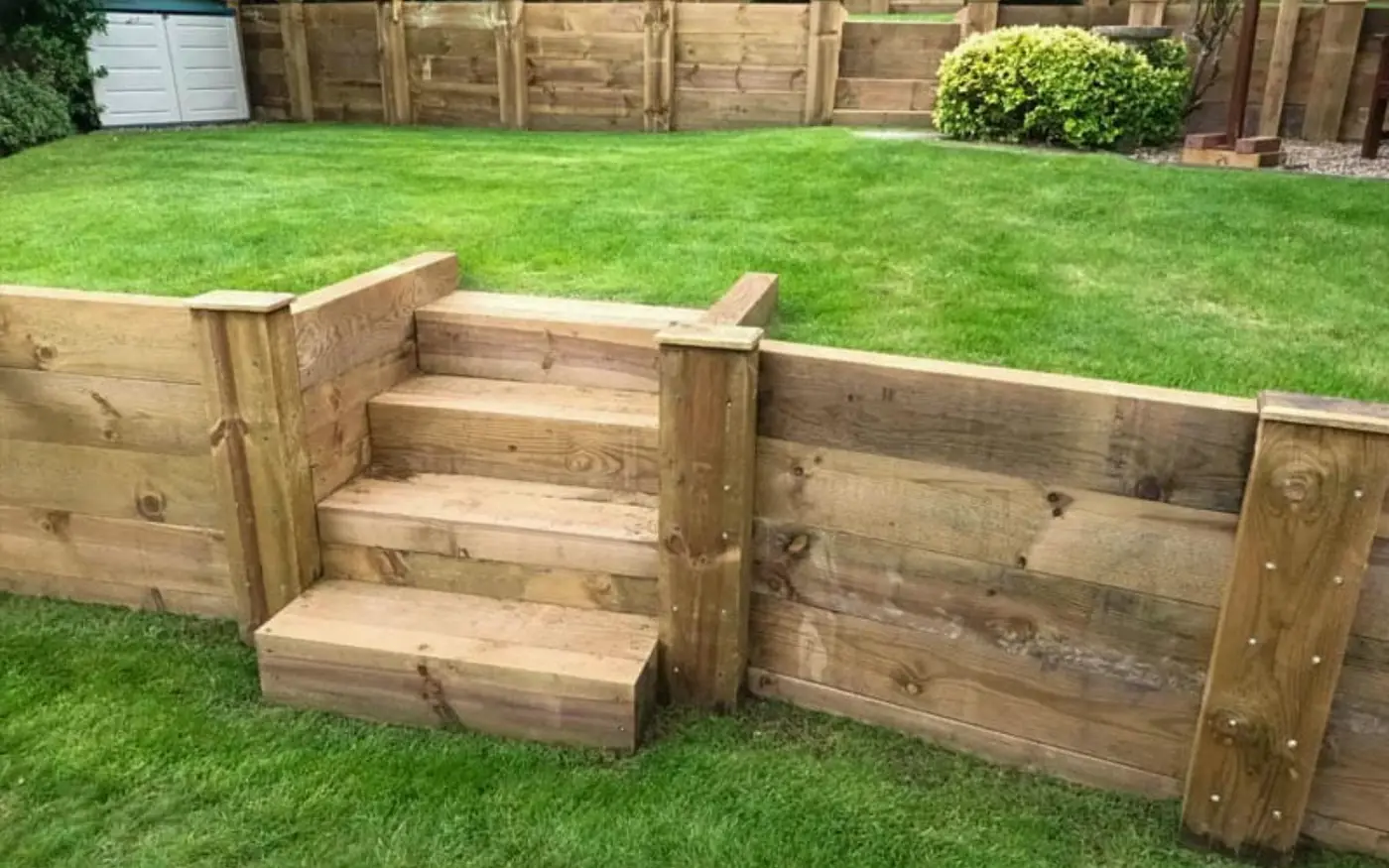
- Treated timber walls up to 1.5 m: $400 to $700 per m² of face, built and drained.
- Concrete sleepers $600 to $1,050, reinforced block $650 to $1,100, mortared stone $800 to $1,500.
- Engineering adds $2,000 to $5,000 and consent fees $2,500 to $6,500 when required.
- Hand-carry sites cost roughly 20 to 50 percent more than drive-on sites.
Retaining walls are priced by the square metre of wall face. The figures below are guide ranges for the Wellington region, where steep access and rock put prices above much of the country. Flat, drive-on sites elsewhere in New Zealand often come in at or under the low end. Every figure includes drainage behind the wall.
Price per square metre by wall type
| Wall type | Guide price per m² |
|---|---|
| Treated timber pole and rail, to 1.5 m | $400 to $700 |
| Engineered timber, over 1.5 m | $700 to $1,100 |
| Keystone-style segmental block | $550 to $950 |
| Concrete sleepers in steel posts | $600 to $1,050 |
| Reinforced concrete masonry block | $650 to $1,100 |
| Gabion baskets | $450 to $850 |
| Timber or concrete crib | $600 to $1,000 |
| Stacked rock or boulder | $400 to $800 |
| Mortared natural stone | $800 to $1,500 |
Indicative ranges for each square metre of wall face, built and drained, on a site a small digger can get to. The firm figure is whatever the builder writes down after seeing the site.
How to work out your wall's area
Measure the length. Measure the height from the lower ground to the top of the wall at several points and take the average. Multiply the two. Count only the part above ground: the buried poles or footing are already in the rate.
Three worked examples
A garden terrace
Timber, 9 metres long and 1 metre high, is 9 m². At $400 to $700 per m² the wall comes to $3,600 to $6,300. No engineer or consent is needed if nothing loads the top.
A boundary wall with a fence on it
Concrete sleepers, 15 metres long and 1.4 metres high, is 21 m². At $600 to $1,050 per m² that is $12,600 to $22,050. If the fence is solid and the site is exposed, the builder may want an engineer to size the posts, adding $2,000 to $5,000.
A wall under a parking pad
Reinforced block, 7 metres long and 2 metres high, is 14 m². At $650 to $1,100 per m² the wall itself is $9,100 to $15,400. It carries vehicles, so add engineering at $2,000 to $5,000 and consent fees and council charges of $2,500 to $6,500. A geotechnical report, if the engineer asks for one, is another $3,000 to $6,000.
What moves the price
Access
This is the largest single factor in Wellington. A wall beside a driveway that a truck and a 1.7 tonne digger can reach sits at the low end. A wall 40 steps above the road, where holes are dug by hand and every pole is carried, costs about 20 to 50 percent more. Getting spoil out is part of this: soil that has to be barrowed down steps and trucked away costs far more than soil that can be spread on site.
Height
Taller walls cost more per square metre, not only more in total. Poles get thicker and deeper, footings wider, steel heavier. Crossing 1.5 metres also brings in the engineer and the consent.
Ground
Solid rock in the post holes slows drilling and may need a breaker. Soft fill means deeper poles to find something firm. Neither is fully known until digging starts, so good quotes state an allowance and what happens if it is exceeded.
What is on top
A fence, a balustrade, steps through the wall and a capping all add cost. So does any surcharge, because it changes the design.
Demolition
Taking out an old wall and disposing of it runs $100 to $250 per lineal metre. Old concrete and rotten crib walls on tight sites are at the upper end.
Costs that are easy to overlook
- Engineer's site inspections during the build, usually included in the design fee but worth confirming.
- A boundary survey if the pegs are missing.
- Reinstating lawn, paths, planting or a fence disturbed by the work.
- Traffic management if materials are unloaded on a narrow street.
- Connecting the drain outlet to stormwater.
Ways to keep the cost down without weakening the wall
- Stay within the exemption where the site allows: 1.5 metres or less and no load on top. Two well-separated terraces can replace one tall wall.
- Choose the material to suit access. On a steps-only site, timber or sleepers beat block and rock simply because they can be carried.
- Reduce excavation. Building in front of an old wall, or following the existing bank, means less spoil.
- Do not cut drainage. It is a small part of the price and the main thing that decides how long the wall lasts. See the drainage guide.
Comparing quotes
Ask every builder to state the same things: wall type, length and height, pole or footing depth, timber treatment or steel coating, what drainage is included and where it discharges, the rock allowance, spoil removal, and whether engineering and consent fees are in or out. Prices that look far apart often turn out to describe different walls.
For a written price on your own site, call 04 887 1262. We arrange the visit with an independent Wellington retaining wall builder we partner with. The types guide will help you decide what to ask for.
Questions people ask
How much does a retaining wall cost per metre in NZ?
Builders price by the square metre of face, not the lineal metre, because height matters so much. As a guide, a 1 metre high timber wall is $400 to $700 for each metre of length in Wellington, and a 1 metre high concrete sleeper wall is $600 to $1,050.
Why is my quote higher than these ranges?
The usual reasons are difficult access, rock, a wall over 1.5 metres, a load on top that needs engineering, or a large amount of spoil to remove. Ask the builder which of those is driving the figure.
Is a cheap retaining wall a false economy?
It is if the saving came from shallower poles, lower timber treatment or no drainage. Those are invisible on the day and are the reasons walls fail early. A plain timber wall built properly is still the cheapest sound option.